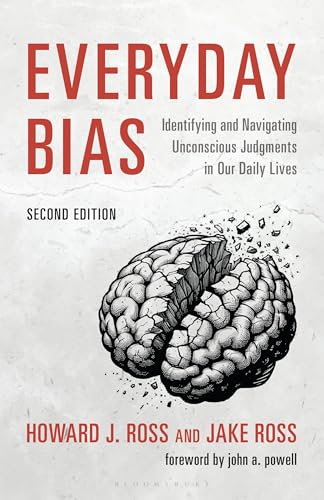
Identifying and Navigating Unconscious Judgments in Our Daily Lives. An updated edition for the age of algorithms.
To be human is to be biased, especially now, as the technologies and politics of our moment quietly reinforce our fastest, least conscious reactions. The second edition of Everyday Bias (Bloomsbury, 2026), which I co-authored with my father, Howard Ross, builds on the ideas that reached hundreds of thousands of readers in the first edition and brings them urgently into the present.
New chapters explore the structures of power that create micro-inequities and micro-advantages, the attention economy's engineering of isolation and distrust, and the embedded prejudices being encoded and amplified by artificial intelligence. It's a book about seeing the patterns we've been trained not to see, and choosing something more human in response.
The through-line, and the reason this book sits at the center of my work at BelongTogether, is simple: staying human in the face of technological overwhelm is a practice, not an accident. As algorithms sort us into feeds and AI systems make more of our decisions for us, the muscle of noticing, of pausing before we react, of belonging to each other on purpose, is the muscle we most risk losing.
If the book resonates and you're wondering how these ideas land inside a team, a leadership practice, or a community you're building, let's talk. That conversation is where the work continues.